
Understanding Diabetes: Causes, Symptoms, Prevention, and Effective Management

Diabetes is one of the most common chronic health conditions affecting millions of people worldwide. As the prevalence of this disease continues to rise, understanding what is diabetes, its causes, symptoms, prevention methods, and effective treatment options has become increasingly important. Whether you have recently been diagnosed or want to learn more about maintaining healthy blood sugar levels, gaining knowledge about diabetes can help you make informed health decisions.
According to health experts, uncontrolled high blood sugar can lead to severe complications affecting the heart, kidneys, eyes, and nervous system. Fortunately, with proper diabetes management, regular monitoring, and healthy lifestyle choices, many people can successfully live healthy and productive lives.
What Is Diabetes and How Does It Affect Blood Sugar Levels?
To understand what is diabetes, it is important to know how the body processes glucose. Glucose is the primary source of energy for the body’s cells. The hormone insulin, produced by the pancreas, helps move glucose from the bloodstream into cells where it can be used for energy.
When a person develops diabetes, the body either does not produce enough insulin or cannot use insulin effectively. This condition causes elevated blood sugar levels, which can eventually damage various organs and tissues throughout the body.
Maintaining healthy blood sugar control is essential because consistently elevated glucose levels increase the risk of long-term diabetes complications, including cardiovascular disease, kidney damage, and vision problems.
Types of Diabetes
Type 1 Diabetes
Type 1 diabetes is an autoimmune disease in which the immune system attacks insulin-producing cells in the pancreas. People with Type 1 diabetes require lifelong insulin therapy because their bodies produce little or no insulin.
This condition is often diagnosed in children, teenagers, and young adults, although it can develop at any age.
Type 2 Diabetes
Type 2 diabetes is the most common form of diabetes worldwide. It occurs when the body’s cells become resistant to insulin, a condition known as insulin resistance. Over time, the pancreas struggles to produce enough insulin to maintain healthy blood glucose levels.
Risk factors for Type 2 diabetes include obesity, physical inactivity, poor dietary habits, and family history.
Gestational Diabetes
Gestational diabetes develops during pregnancy and affects how the body uses glucose. Although it often resolves after childbirth, women who experience gestational diabetes have a higher risk of developing Type 2 diabetes later in life.
Prediabetes
Prediabetes is a condition in which blood sugar levels are higher than normal but not high enough for a diabetes diagnosis. Identifying and treating prediabetes early can significantly reduce the risk of developing Type 2 diabetes.
Causes of Diabetes
Understanding the causes of diabetes can help individuals take preventive measures and reduce their risk.
Genetics and Family History
One of the most significant diabetes risk factors is genetics. Individuals with a family history of diabetes are more likely to develop the condition.
Insulin Resistance
Insulin resistance is a primary cause of Type 2 diabetes. When cells become less responsive to insulin, glucose remains in the bloodstream, causing elevated blood sugar levels.
Excess Weight and Obesity
Being overweight significantly increases the risk of developing Type 2 diabetes. Excess abdominal fat is particularly associated with reduced insulin sensitivity and poor blood sugar control.
Sedentary Lifestyle
A lack of physical activity contributes to obesity and worsens insulin resistance. Regular exercise is essential for diabetes prevention and overall health.
Unhealthy Eating Habits
Frequent consumption of sugary beverages, processed foods, and refined carbohydrates can increase the likelihood of developing diabetes.
Common Diabetes Symptoms and Early Warning Signs
Recognizing diabetes symptoms early is crucial for timely diagnosis and treatment.
Frequent Urination
One of the most common early signs of diabetes is frequent urination. Excess glucose in the bloodstream forces the kidneys to work harder, leading to increased urine production.
Excessive Thirst
People with diabetes often experience excessive thirst because frequent urination can lead to dehydration.
Increased Hunger
Even after eating, individuals may feel unusually hungry because glucose cannot effectively enter the body’s cells.
Fatigue
Persistent fatigue is a common symptom of diabetes because cells are unable to utilize glucose efficiently for energy production.
Unexplained Weight Loss
Unexplained weight loss can occur, especially in individuals with Type 1 diabetes, as the body begins breaking down fat and muscle for energy.
Blurred Vision
High blood sugar levels can affect the lenses of the eyes, causing temporary blurred vision.
Slow Healing Wounds
Another important sign and symptom of Type 2 diabetes is delayed wound healing due to impaired circulation and immune function.
How Is Diabetes Diagnosed?
Healthcare providers use several methods to diagnose diabetes and monitor blood sugar levels.
Fasting Blood Glucose Test
A fasting blood glucose test measures blood sugar after an overnight fast and is commonly used for diabetes screening.
HbA1c Test
The HbA1c test measures average blood sugar levels over the previous two to three months. It is one of the most reliable tools for diagnosing and monitoring diabetes.
Oral Glucose Tolerance Test
This test evaluates how effectively the body processes glucose after consuming a sugary drink.
Regular testing is essential for identifying prediabetes, diagnosing diabetes early, and improving long-term outcomes.
Diabetes Complications: Why Blood Sugar Control Matters
Poorly managed diabetes can lead to serious diabetes complications.
Heart Disease and Stroke
People with diabetes are at a significantly higher risk of cardiovascular disease. Effective diabetes management can help reduce the likelihood of heart attacks and strokes.
Kidney Disease
High blood sugar can damage the kidneys over time, leading to chronic kidney disease or kidney failure.
Diabetic Retinopathy
One of the leading causes of vision loss is diabetic retinopathy, a condition caused by damage to the blood vessels in the retina.
Diabetic Neuropathy
Diabetic neuropathy refers to nerve damage caused by prolonged high blood sugar levels. Symptoms may include numbness, tingling, and pain in the hands and feet.
Foot Problems
Poor circulation and nerve damage can increase the risk of foot ulcers and infections.
Diabetes Prevention: How to Prevent Type 2 Diabetes Naturally
Many people ask, “Can diabetes be prevented?” The answer is yes, particularly for Type 2 diabetes.
Maintain a Healthy Weight
Weight management is one of the most effective strategies for diabetes prevention. Even a modest reduction in body weight can significantly improve insulin sensitivity.
Follow a Healthy Diabetes Diet
A balanced diabetes diet focuses on nutrient-rich foods that help regulate blood sugar levels.
Increase Physical Activity
Regular exercise is considered one of the best exercises for diabetes management and prevention. Activities such as walking, cycling, swimming, and strength training improve insulin sensitivity and help maintain healthy blood glucose levels.
Avoid Smoking
Smoking increases the risk of diabetes and many associated complications.
Manage Stress
Chronic stress can negatively affect blood sugar regulation. Stress management techniques such as meditation and yoga can support better diabetes control.
Best Foods for Diabetes and Blood Sugar Control
Choosing the best foods for diabetes can make a significant difference in overall health.
Leafy Green Vegetables
Spinach, kale, and broccoli are rich in nutrients and low in carbohydrates, making them excellent choices for managing blood sugar.
Whole Grains
Whole grains provide fiber, which slows glucose absorption and promotes stable blood sugar levels.
Legumes
Beans, lentils, and chickpeas are rich in protein and fiber and are considered among the best foods for diabetes.
Fatty Fish
Salmon, sardines, and mackerel provide omega-3 fatty acids that support heart health and reduce inflammation.
Nuts and Seeds
Nuts and seeds provide healthy fats and can help improve blood sugar control.
Foods to Avoid with Diabetes
People with diabetes should limit:
- Sugary beverages
- White bread
- Processed snacks
- Refined carbohydrates
- Deep-fried foods
Reducing these foods can help improve diabetes control and overall health.
Effective Diabetes Management and Treatment Options
Successful diabetes management requires a comprehensive approach.
Blood Glucose Monitoring
Regular blood glucose monitoring helps individuals understand how food, exercise, and medications affect their blood sugar levels.
Diabetes Medications
Various diabetes medications are available to help regulate blood sugar. Healthcare providers recommend treatment plans based on individual needs.
Insulin Therapy
For individuals with Type 1 diabetes and some cases of Type 2 diabetes, insulin therapy is necessary to maintain healthy blood glucose levels.
Healthy Lifestyle for Diabetes
A healthy lifestyle for diabetes includes:
- Balanced nutrition
- Regular exercise
- Adequate sleep
- Stress management
- Routine medical checkups
These habits contribute to effective diabetes care and long-term health.
Living With Diabetes: Practical Self-Care Tips
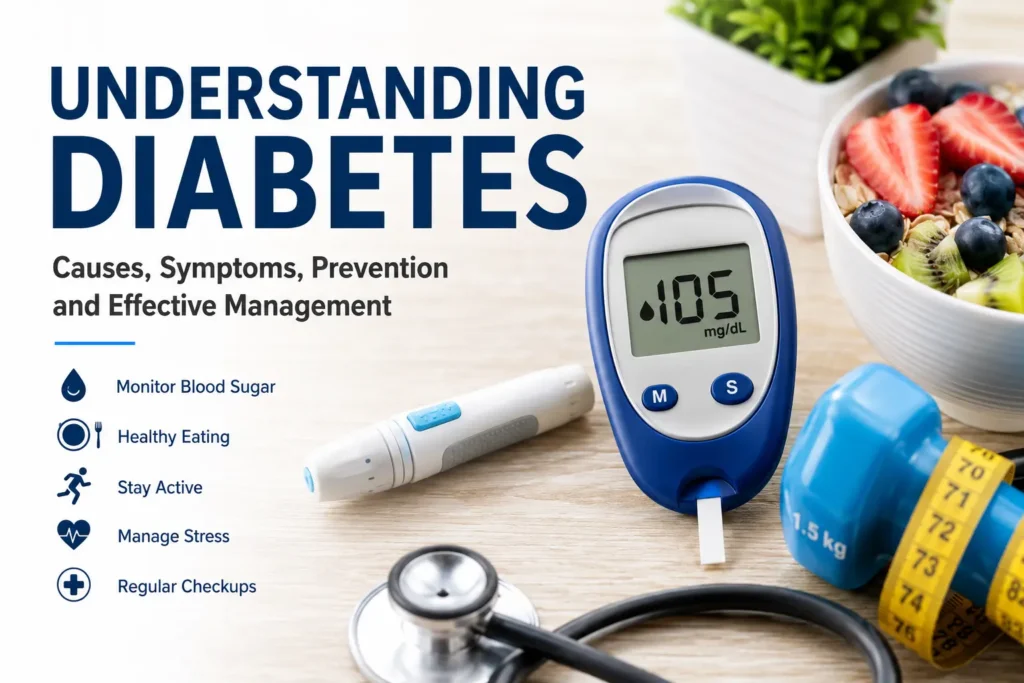
Living with diabetes requires ongoing commitment and awareness. Effective diabetes self-care includes monitoring blood sugar, following a healthy eating plan, staying physically active, and taking medications as prescribed.
People who prioritize diabetes wellness often experience better energy levels, improved quality of life, and reduced risk of complications.
Support from healthcare professionals, family members, and diabetes support groups can make managing the condition easier and more sustainable.
Frequently Asked Questions About Diabetes
What are the early signs of diabetes?
Common early signs of diabetes include frequent urination, excessive thirst, fatigue, blurred vision, and unexplained weight loss.
Can Type 2 diabetes be prevented?
Yes. Type 2 diabetes prevention is possible through healthy eating, regular exercise, weight management, and routine health screenings.
What foods help lower blood sugar levels?
Leafy vegetables, whole grains, legumes, nuts, and fatty fish are among the best foods for diabetes and can support healthy blood sugar levels.
How is diabetes treated?
Diabetes treatment may involve lifestyle changes, diabetes medications, insulin therapy, and regular blood glucose monitoring.
What is the best exercise for diabetes management?
Walking, cycling, swimming, resistance training, and yoga are among the best exercises for diabetes management because they improve insulin sensitivity and support blood sugar control.
Conclusion
Understanding diabetes, its causes, symptoms, prevention strategies, and treatment options is essential for maintaining long-term health. Whether you are concerned about prediabetes, managing Type 2 diabetes, or supporting a loved one living with diabetes, knowledge is a powerful tool.
By following a healthy diabetes diet, engaging in regular physical activity, monitoring blood sugar levels, and practicing effective diabetes management, individuals can significantly reduce their risk of complications and improve their quality of life.
The key to successful diabetes prevention, diabetes care, and long-term blood sugar control lies in making consistent, healthy lifestyle choices every day.